
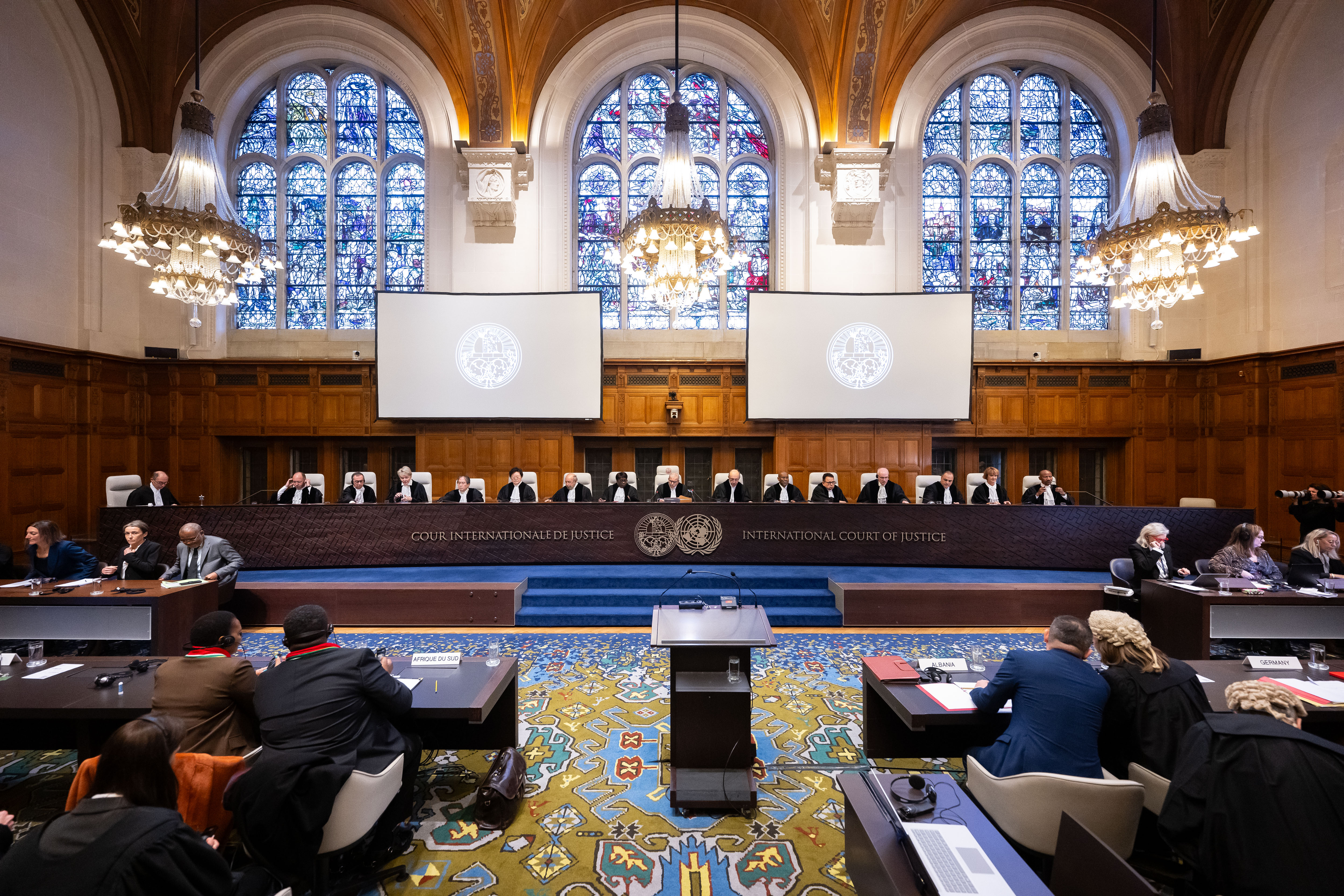
On December 2, 2024, a public hearing began as part of the deliberations to seek an opinion from the International Court of Justice (ICJ) on the obligations of governments in climate change and their legal liability for violations. The hearings lasted approximately two weeks, and a record number of 96 countries and 11 regional organizationsstatement of opinionThe first attempt to hold states legally responsible for climate change was a major step forward in an environmental issue that has attracted worldwide attention. This is the first attempt to question the legal responsibility of states in climate change, a major step forward in an environmental issue that has attracted worldwide attention.
The movement was led by Vanuatu, a small island nation in the South Pacific. Vanuatu included.Pacific nationsThen, greenhouse gases, the cause of climate changeamount of dischargeare miniscule, yet the effects of climate change are severe and threaten the survival of nations and peoples. Vanuatu has long led the Pacific nations in addressing climate change issues.We have been working on it.
In this article, we would like to review the current situation in the Pacific Islands and the series of developments leading up to the recent ICJ talks.
(This event was called "GNV 2024 Lurking World's 10 Biggest News Items(It was also selected as the 6th place in the "World's Most Beautiful Artists.)

Public hearing at the ICJ (Photo:UN Photo/ICJ-CIJ/Frank van Beek [Fair use])
Table of Contents
Climate Change in the Pacific Islands
The Pacific Islands are a group of islands in the Pacific Ocean, numbering more than 4,000 islands in total. The islands have been inhabited and settled by indigenous peoples for many years and have experienced colonial rule by European nations, the United States, Australia, Japan, and others since the 16th century. However, there are still many islands in the Pacific that are not independent and remain in the possession of European and other nations. For more information.GNV Articlesfor more information.
Looking within each country, from Papua New Guinea with a population of about 10 million (2025) to Niue (*1) with about 1,800 (2025)populationand area vary from country to country and region to region. Most countries and regions have weak economies because they are scattered over a vast area, with small markets and geographic distances from international markets that make it difficult for industry to develop. As a result, they are dependent on aid from other countries, mainly former sovereign states.trendThere are Instead, some countries have free association agreements or other agreements with other countries and receive significant influence from them beyond economic aspects.
For some time now, there have been cries of climate change-induced existential crisis in the Pacific Islands. A number of unusual oceanic phenomena illustrate the complexity and severity of climate change. Accelerated sea level rise, ocean warming, and acidification, whichThree blowsis fatal for islands with small island land area.
According to the UN report, the average sea level rise in the Pacific Ocean from 1993 to 2023 will be 15 cm, and if global temperatures rise 1.5°C to 3.0°C above pre-industrial levels, the Pacific Ocean will face a maximum sea level rise of 50 to 68 cm.possibilityThe damage is already being seen in many parts of the world. The damage has already been seen in many places, for example, on the Fijian island of Vanua Levu, where flooding due to sea level rise and coastal erosion has pushed inlandtransferSome communities have been forced to
Rising sea temperatures and acidification lead to changes in ecosystems. For example, a global coral bleaching event has been confirmed again since 2023, according toresearchThere are also Coral bleaching has broad implications, including economic and food security, especially for people living in coral habitats.

Cyclone damage in Vanuatu in 2015 (Photo:United Nations Development Programme / Flickr [CC BY-NC-ND 2.0])
In addition to the above three blows, the increase in extreme weather events is also a problem, and many countries and regions have been severely affected by flooding and severe cyclones caused by storm surges.occurrenceThe total damage is estimated to have reached US$430 million, with 661 TP3T of the country's population affected by Cyclone Judy and Cyclone Kevin.
While this climate crisis is not limited to the Pacific region but is occurring across the globe, it is clear that the damage in the Pacific has already reached a severe level.
Climate change measures to date
To counter these threats, Pacific nations and the region will work together to develop a regionalcooperationThe company has been strengthening itsPacific Islands Forum (PIF)is part of this effort. Climate change not only increases the risk of disasters, but also seriously affects political and economic development. the PIF serves as a forum for dialogue and regional cooperation in a wide range of areas, including politics, economics, and security, and has resulted in groundbreaking agreements in the area of climate change action. "Framework for Resilient Development in the Pacific (FRDP) 2017-2030is one example; for the PIF, seeGNV ArticlesPlease also refer to the following.
However, the lack of funding has also remained a stumbling block for a long time. Climate-relatedInternational Fundand others, but structural obstacles have resulted in a lack of opportunities for the Pacific region to access adequate funds.

Coastal maintenance project in Tuvalu (Photo:UNDP Climate / Flickr [CC BY-NC 2.0])
One of the current standards for climate change-related rules among nations is theParis Agreement (1985)The agreement, adopted at the 21st Conference of the Parties to the United Nations Framework Convention on Climate Change (COP21) in 2015, was said to be groundbreaking as a framework that requires all participating countries, including low-income countries, to make efforts to reduce greenhouse gas emissions, but it only targets and encourages efforts and does not impose any obligations other than reporting progress. However, it is only an effort target and incentive, with no obligations other than to report on progress. Various climate change countermeasures have been implemented based on the Paris Agreement, but their results have been insufficient because they are not legally binding.
Here, we will discuss three important concepts in climate change countermeasures: Mitigation, Adaptation, and Loss & Damage.conceptI would like to touch on the following. Mitigation" refers to measures taken against the causes of climate change, such as reducing greenhouse gas emissions, while "adaptation" refers to measures taken against the inevitable effects of the climate crisis, such as building sea walls to prepare for flooding and sea level rise. Loss and damage" refers to measures taken in response to adverse impacts that have occurred despite these "mitigation and adaptation" measures. The concept of "loss and damage" is closely linked to fairness and equity. This is because many of the world's vulnerable countries to climate change are among the lowest emitters of greenhouse gases. The term was first formally used at COP19 in 2013, and interest has been growing ever since. Pacific countries have also attached great importance to the concept and have strongly urged the establishment of a fund for "loss and damage" as a priority at COP27 in 2022.advocacyThe first time a fund for "loss and damage" was established at COP 27. As a result, a fund for "loss and damage" was established for the first time at COP 27.
November 2024 in Baku, AzerbaijanCOP29The meeting was held at the same time as the meeting of the Climate Finance Committee. Discussions were difficult and extended, but as a result, progress was made on climate finance. A compromise was reached on climate finance contributions, with a target of US$300 billion per year by 2035. While this is far short of the US$1.3 trillion requested by low-income countries vulnerable to climate change, it is three times the current target. Other,International Carbon Credit Tradingcertain rule-making and energy-related agreements, and discussions on gender and climate change were taken up.resultsleft.
However, again, concrete progress has been insufficient.voicewas greater. The result was an increasing call for the need to mandate cooperation with legal force, rather than as a matter of "good faith," which had been the basis for the way in which the project had proceeded. Vanuatu alsodissatisfactiondivulged. Expressing deep concern about the lack of progress on key agenda items such as the new joint numerical climate finance goal (NCQG), the Mitigation Work Plan (MWP), and the Global Goal on Adaptation (GGA), he stressed that the COP has been going on for a long time and that it will not be business as usual in the future. He emphasized that the COP has been going on for a long time and that it will not be business as usual in the future. In fact, the GHGamount of dischargeand the earth.average temperatureThe ICJ's hearing at the ICJ is expected to bring more and more attention to the case.

Scene of consultations on small island states at COP 29 (Photo:Commonwealth Secretariat / Flickr [CC BY-NC 2.0])
rise in popularity
This attempt to bring these voices to the ICJ and clarify countries' obligations and responsibilities to climate change began in an international environmental law classroom at the University of the South Pacific, Vanuatu campus.In 2019, 27 law students gathered in this classroom as part of a "practical learning" initiative to create the most progressive legal tool, with the goal of setting a precedent for countries of all sizes.raised (e.g. flag)The students were not limited to the classroom, however. But the students did not stop at the classroom.prospectusand sent it to the PIF countries. He also approached the Minister of Foreign Affairs of Vanuatu directly, who was so impressed that he took it to the government level andget goingThe ICJ was to be asked to provide a recommendation to the ICJ in 2022. In 2022, the PIF, under the leadership of Vanuatu, will officially request the ICJ to give its advisory opinion.decisionThe first time the company was founded, it was a small company.
To request an advisory opinion from the ICJ, certainprocedureThe ICJ has to step on theUnited Nations CharterUnder Article 96, requests for advisory opinions are accepted only from the General Assembly and the Security Council, or from other bodies and specialized agencies authorized by the General Assembly. A core group of 18 countries (*2) was formed to discuss and prepare a draft for adoption by the UN General Assembly, and a resolution was unanimously adopted by the 77th session of the General Assembly in March 2023.adoptionIt was It was decided to request the ICJ to provide an opinion on the obligations of states under international law in climate change.
At the public hearing
Pitched to the ICJquestionare two. What obligations do states have under international law to protect the climate system and the environment from greenhouse gas emissions for the benefit of present and future generations?" and "Under these obligations, what are the legal consequences if a state, by its acts or omissions, causes significant damage to the climate system or environment?" arise?". The second question, in particular, concerns the responsibility of high-income countries that have caused significant damage to the environment to small island low-income countries and other states that they owe to the environment.

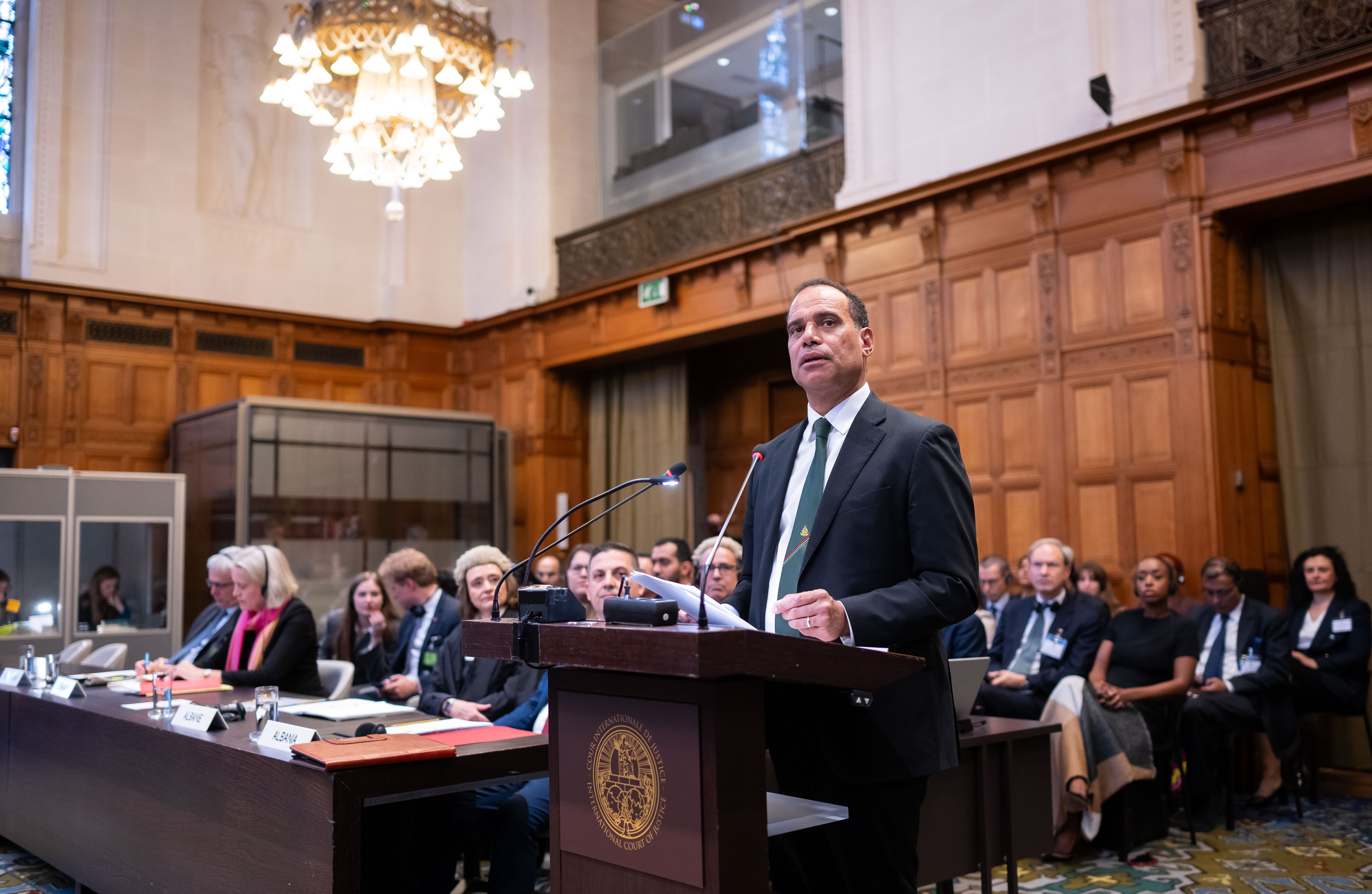
The Vanuatu representative's statement at the ICJ (Photo:UN Photo/ICJ-CIJ/Frank van Beek [Fair use])
At the hearing, which began on December 2, 2024, Vanuatu's Minister of Lands and Resources, Ralph Regenvanu, who led theinitial responseVanuatu has made the following statement. Vanuatu is a victim of acts committed by other countries and is entitled to compensation for damages from high greenhouse gas emitting countries that are contributing to climate change.claimHe stated. He stated that climate change is interfering with a country's right to self-determination as stated in the UN Charter by altering the environment that supports political, economic, social, and cultural aspects. ManyCountries and organizationsexpressed general agreement. One of the students who started the movement at the University of the South Pacific was also at the hearing.statementThe company is conducting the project.
The Association of Small Island States (AOSIS), which brings together 39 small island states and low-lying coastal low-income countries, including Grenada and the Cook Islands, also attended the meeting and said that international law must evolve to address climate change and its unequal impacts.claimThe report also called for the Along with the provision of technical and rehabilitation assistance, they also called for affirmation of the principle of "statehood" in areas affected by climate change. This is to maintain the existence of the state in the event that the state's land territory is physically altered or completely inundated by sea level rise.
However, many major greenhouse gas emitting countries are reluctant to establish new legal responsibilitiespostureshowed. For example, Saudi Arabia, a major oil producer, said that the existing UN Convention on Climate Change is already the perfect answer to the nation's obligationsclaimand opposed the establishment of further legal responsibilities. Germany, which was a member of the core group that drafted the General Assembly resolution, also expressed disappointment from other countries that the Paris Agreement was a definitive treaty establishing national obligations.
In addition to the countries listed above, other countries that opposed further legal liability included the United States, the United Kingdom, Australia, China, and South Africa. China, the country with the highest annual carbon dioxide emissions, said that its greenhouse gas emissions do not constitute an international tort under general international law.statedThe U.S., the second largest emitter of greenhouse gases, has acknowledged its responsibility. The United States, the second largest greenhouse gas emitter, acknowledges its responsibility, but says that the climate crisis can only be solved through international cooperation, and that it is not willing to make existing treaties legally binding.passiveThe first time the company was in

Coal Mines in Australia (Photo:Adani Mining Australia / Wikimedia Commons[.CC BY-SA 4.0])
Expectations and Disappointments
The decision to bring the matter to the ICJ will remain socially significant in a number of ways. First, the attempt to clarify the legal effect of obligations and responsibilities for damage to the environment is highly regarded by many countries and NGOs as a landmark step in international environmental law.evaluationThe fact that more than 100 countries and organizations, the largest number ever at the ICJ, participated in the ICJ is an indication of the high level of global interest in the issue. In addition, the fact that statements were received not only from "vulnerable" countries but also from international organizations such as the European Union (EU) and the Organization of Petroleum Exporting Countries (OPEC) is another reason why this is considered an unprecedented moment. This is also an example of successful multilateral diplomacy by the countries of the so-called "Global South," which consists of low-income countries.be reportedThe following is a list of the most common problems with the
The hearing is expected to take several months and a final advisory opinion from the ICJ is expected to be issued by the end of 2025.advisory opinionis not binding, but is respected as a decision of a court with legal weight and authority. It also contributes to the interpretation and development of international law. The advisory opinion on climate change will influence future global judicial proceedings, be referred to national courts, and influence diplomatic negotiations.possibleThere is a UN Secretary-General Antonio Gretez said, "It will help us to take bolder and stronger measures to combat climate change."Stated.The following is a list of the most common problems with the
On the other hand, the debate highlighted a clear conflict structure. Christel Pratt, head of the Organization of African, Caribbean, and Pacific States (OACPS), called on the major powers, who urged that they should not go beyond the existing framework for combating climate change, to "Great disappointmentexpressed the need for a "new climate treaty". He stressed the need not only to create a new climate treaty, but also to review international law as a whole.
We will first wait with anticipation for the ICJ's advisory opinion so that a safe future for people around the world can be guaranteed.
1 Niue participates in regional organizations such as the Pacific Islands Forum as a country, but is not a member of the United Nations.
2 Eighteen countries: Angola, Antigua and Barbuda, Bangladesh, Costa Rica, Germany, Liechtenstein, Federated States of Micronesia, Morocco, Mozambique, New Zealand, Portugal, Romania, Samoa, Sierra Leone, Singapore, Uganda and Vietnam.
Writer: Kyoka Wada



I was moved by the fact that this major movement began with a class of university students. I was able to rethink the urgency of the next generation of students and the significance of academia as a place of open learning.
I am also disappointed in the attitude of trying to evade responsibility of the countries that have created the causes of climate change. In particular, I thought that the idea that "the climate crisis can be solved through international cooperation" was not at all reflective of the current tight situation; there will be much to think about, such as what kind of ruling the ICJ will issue in the future, how to stop high-income countries from evading responsibility, and what we, as citizens, can do about it.
I didn't know much about this field, but it was very interesting! Thank you for writing this article!